 By admin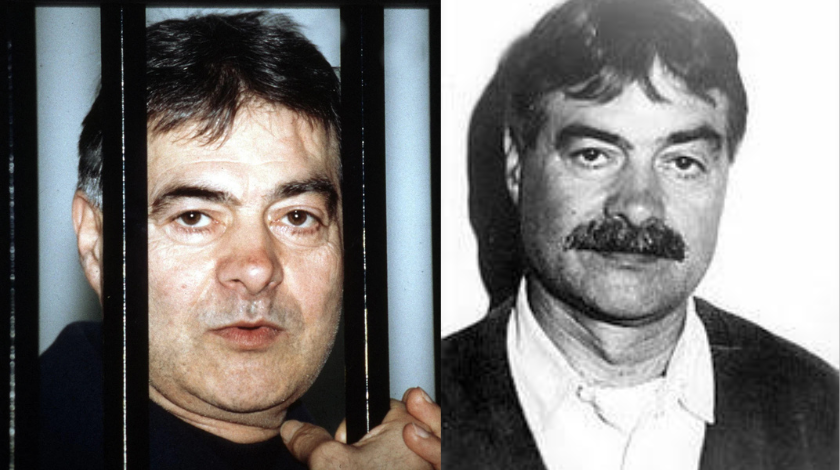
Benedetto “Nitto” Santapaola was one of the most feared and influential bosses of the Sicilian Mafia, also known as Cosa Nostra. Born in Catania, Sicily, in 1938, he eventually became the head of the Santapaola-Ercolano clan and expanded its influence across eastern Sicily. Throughout the late 1970s and 1980s, his organization accumulated enormous wealth through extortion, drug trafficking, public contract manipulation, and violent intimidation. Italian prosecutors linked him to numerous murders and several of the darkest episodes in modern Italian criminal history.
Santapaola earned nicknames such as “Il Cacciatore” (The Hunter) because of his passion for hunting. Behind that nickname, however, was a criminal leader whose organization was associated with hundreds of violent crimes. He was eventually convicted multiple times and sentenced to several life terms in prison. Authorities considered him one of the central figures of organized crime during the era when Cosa Nostra exercised enormous influence across Sicily.
Early Life in Catania
Growing up in one of Catania’s poorer neighborhoods, Santapaola was surrounded by relatives who already had connections to organized crime. During the 1960s, he entered the local Mafia family and steadily climbed its ranks. Unlike impulsive criminals, he developed a reputation for patience, careful planning, and building strategic alliances. These characteristics helped him survive violent internal conflicts that destroyed many rival factions.
His rise also reflected the changing nature of organized crime in Sicily. Rather than relying solely on street violence, Mafia leaders increasingly infiltrated legitimate businesses and public institutions. Santapaola embraced this model, cultivating relationships that extended beyond traditional criminal circles. This approach allowed his organization to become deeply embedded in both the underground economy and legitimate commercial activities.
Rise Within Cosa Nostra
Following internal Mafia conflicts, Santapaola aligned himself with the powerful Corleonesi faction led by notorious bosses including Totò Riina. This alliance dramatically strengthened his position and enabled him to assume leadership of the Catania Mafia family. Under his command, the clan expanded into construction, transportation, public procurement, narcotics trafficking, and systematic extortion.
Italian investigators later described Santapaola as a leader who combined ruthless violence with sophisticated business methods. Unlike the stereotypical image of gangsters operating in secrecy, he cultivated respectable public appearances while allegedly directing an extensive criminal enterprise behind the scenes. This dual identity made him particularly difficult for law enforcement to dismantle during the height of his influence.
Criminal Activities
Santapaola’s organization generated income from numerous illegal operations. Drug trafficking represented a major source of revenue, while extortion affected countless businesses across eastern Sicily. Construction contracts, infrastructure projects, and public procurement were frequently targeted by Mafia groups seeking financial gain through intimidation or corruption.
Authorities also accused his network of using violence to eliminate rivals and silence critics. Investigative journalists, entrepreneurs, and public officials who challenged Mafia influence often faced serious threats. Over time, Italian courts convicted Santapaola of multiple crimes, including Mafia association and murder, resulting in several life sentences. His criminal empire became one of the strongest examples of how organized crime could penetrate both illegal markets and legitimate economic sectors.
Major Crimes and Convictions
Among the crimes most closely associated with Santapaola was the murder of investigative journalist Giuseppe Fava, who had publicly exposed connections between organized crime, politics, and business interests. Italian courts later convicted Santapaola as one of those responsible for ordering the killing.
He was also convicted in connection with major Mafia attacks during the early 1990s, including proceedings related to the bombings that killed anti-Mafia magistrates Giovanni Falcone and Paolo Borsellino. Those attacks shocked Italy and became a turning point in the country’s campaign against organized crime. The investigations that followed led to stronger anti-Mafia legislation, broader law enforcement cooperation, and intensified efforts to dismantle Cosa Nostra’s leadership.
Arrest After Years as a Fugitive
Santapaola spent approximately eleven years as a fugitive before Italian authorities finally located and arrested him in May 1993. His capture represented a major success for law enforcement and symbolized the gradual weakening of Cosa Nostra’s traditional leadership. Reports indicate that he was arrested at a rural property in Sicily after a lengthy investigation.
Following his arrest, he remained imprisoned under Italy’s strict 41-bis prison regime. This special system severely restricts communication between imprisoned Mafia leaders and their criminal organizations in an effort to prevent them from continuing to direct criminal activities while incarcerated. Despite these restrictions, prosecutors periodically investigated allegations that Mafia figures attempted to maintain influence from prison.
Death and Public Reaction
Nitto Santapaola died in March 2026 at the age of 87 while serving multiple life sentences in a high-security prison system. He had reportedly been receiving medical treatment in a prison hospital before his death. His passing marked the end of one of the longest and most notorious criminal careers in modern Italian history.
Many commentators noted that, although one of the last major bosses from the violent Mafia era had died, numerous historical questions regarding political connections, criminal networks, and unresolved investigations remain subjects of scholarly and judicial interest. His death closed a chapter in Italian criminal history but did not erase the broader legacy of organized crime that continues to challenge authorities today.
Timeline of Key Events
| Year | Event |
|---|---|
| 1938 | Born in Catania, Sicily |
| 1960s | Joined the local Mafia organization |
| Late 1970s | Became leader of the Catania Mafia family |
| 1982 | Went into hiding |
| 1993 | Arrested after approximately 11 years as a fugitive |
| 1993–2026 | Served multiple life sentences under the 41-bis regime |
| 2026 | Died while imprisoned in Milan |
Impact on Italy’s Fight Against the Mafia
The investigation and prosecution of Santapaola became part of Italy’s broader struggle against organized crime. During the 1990s, Italian authorities significantly strengthened anti-Mafia laws, expanded witness protection programs, and increased financial investigations targeting criminal assets. These measures weakened many traditional Mafia organizations, although law enforcement agencies continue to combat organized crime today.
The careers of prosecutors, judges, investigative journalists, and police officers involved in anti-Mafia efforts demonstrated the importance of institutional resilience. Their work transformed Italy’s approach to combating organized crime and influenced anti-Mafia strategies in several other countries. Santapaola’s convictions became part of this larger legal and historical process.
Legacy and Historical Significance
Historians generally regard Nitto Santapaola as one of the defining Mafia figures of the late twentieth century. His leadership illustrated how organized crime evolved beyond traditional racketeering into complex systems involving economic infiltration, political influence, and sophisticated criminal enterprises. His story also reflects the enormous human cost of Mafia violence, including the deaths of journalists, judges, police officers, and countless civilians.
Although Cosa Nostra remains active in some forms, the era dominated by powerful bosses like Santapaola has largely faded due to sustained law enforcement pressure and judicial reforms. His legacy now serves primarily as a case study in organized crime, criminal justice, and the continuing importance of defending democratic institutions against corruption and violence.
Conclusion
Nitto Santapaola’s life represents one of the most significant chapters in the history of the Sicilian Mafia. Rising from the streets of Catania to become one of Cosa Nostra’s most influential leaders, he built a criminal empire that shaped decades of organized crime in Italy. His eventual arrest, multiple convictions, and death in prison illustrate both the reach of Mafia power and the persistence of Italy’s anti-Mafia institutions in bringing powerful criminal figures to justice. His legacy remains an important reminder of the long-term consequences of organized crime and the value of sustained efforts to uphold the rule of law.
FAQs
1. Who was Nitto Santapaola?
He was a Sicilian Mafia boss who led the Santapaola-Ercolano clan and became one of the most powerful figures in Cosa Nostra.
2. Why was he imprisoned?
He was convicted of Mafia association, multiple murders, and other serious crimes, receiving several life sentences.
3. When was Nitto Santapaola arrested?
He was arrested on 18 May 1993 after spending approximately eleven years as a fugitive.
4. What was the 41-bis prison regime?
It is Italy’s maximum-security detention system designed to prevent Mafia leaders from directing criminal organizations while imprisoned.
5. When did Nitto Santapaola die?
He died in March 2026 while serving multiple life sentences in a high-security prison hospital in Milan.